Lost Icons

Yesterday I suddenly realised that two of the most influential cultural icons in my life share the same date of death. 

Kurt Cobain died on April 5th 1994. The Nirvana frontman was only 27 and took his own life after struggles with depression since childhood.

Isao Takahata died just two years ago, he was 82. He was the co-founder of Studio Ghibli, the less well-known partner of Hayao Miyazaki. He was often seen bent over his work smoking a cigarette. It was lung cancer which killed him. Miyazaki thought he would live to 95.

Both of these figures have had huge influences on me at different stages of my life. 

Like many in their early teens throughout the last three decades I plunged myself into the Nirvana back catalog. For a few years I only listened to Nirvana or derivatives of them. I bought the Vaselines’ album after hearing Kurt play their songs and pretended to like them, even though it was basically tuneless noise. 

I only started listening to the Beatles after finding out how much Kurt adored them and particularly John Lennon, being convinced to use playback in his music when he was told the Beatles did it too. From the Beatles I opened up to a world of music from the 60s and 70s after shutting myself off to other influences.

My introduction to Ghibli was also a little different to most. While many will be introduced through already being a fan of anime. While I did have an interest in Japanese culture I had never really indulged in much anime or manga. 

After going to university I became very involved in activism, particularly environmentalism. In my second year I took a module on Japanese history and the lecturer mentioned the Ghibli film Pom Poko, directed by Takahata. The story of racoon dogs performing acts of direct action to protect their forest immediately appealed to me. When I watched the film I loved the detail and relatable details. The meetings and struggles the furry protagonists were involved in clearly came from someone who had been through these problems themselves. The internal politics of environmental activism shone through. 

From there I dove into Studio Ghibli to a near obsessive level, similar to how I’d enjoyed Nirvana almost a decade earlier. The films remain my ultimate retreat, not just the work of Takahata but also Miyazaki and the other animators involved in the Studio. The beautiful depiction of nature in their films is a world to get lost in. They also highlight the complex relationships and emotions of life in a way many creators fail to do, particularly in championing female protagonists. Takahata’s films often offer a more experimental approach to animation with a fierce activism laced with a delicate sensitivity.

These characteristics also run through Nirvana’s music. While I don’t listen to them nearly as much as I used to every now and then a strong nostalgia will drag me back to them. The appreciation I have for them now goes beyond the teenage angst that created a passionate fandom. I hear the experimentation and melody of the music and the sensitivity in the lyrics. I move beyond feeling just anger that the rough chords naturally release and see instead the complex emotions involved in the music.

While these two creators work in different fields I have felt a strong connection to them both and their presence is something truly missed in the world. On April 5th I will try to always think of them and give myself time to indulge in both their works.

Leave a comment

Filed under Scribblings

Why we need more cartoons like Tuca & Bertie

1_hhXxluZoLTqAVL4-dqvqfg

I was devastated to discover while scrolling through my Twitter feed that the singularly odd but hugely relatable series,Tuca and Bertie, would not be renewed for a second season on Netflix.

From the opening credits of this bizzare adult cartoon, following the lives of two female anthropomorphic birds in their thirties, there was an unbridled boldness which verged on being off-putting but which was somehow entwined with situations and personality quirks which hit far too close to home.

I’m sure I’m not the only woman who saw herself and her best friend in Bertie and Tuca. One the overthinking introvert, almost drowning in anxieties about the future, the other the raucous extrovert, burying her own fears and unwanted emotions (I’ll leave you to guess which one I am).

Cartoons dealing with adult themes isn’t anything new and recent years have seen an explosion with the likes of Rick and Morty and BoJack Horseman dealing with topics which aren’t only risque but also existentially challenging. Despite that, there was something about Tuca and Bertie which felt like it pushed limits further than other shows.

I think the moment came as I watched the usually nervous Bertie violently masturbate over the sink of a bakery lavatory. Female masturbation seems to continue to be a cultural taboo and the sexualisation of female bodies is as rampant in adult cartoons as everywhere else, an issue show creator, Lisa Hanawait, was keen to tackle. This unexpected image of a woman grasping her sexuality felt like it crossed a line which others hadn’t done before. 

It is not only the storylines which are pushing adult animation into more exciting avenues but also their artistic approach. They’re not afraid to push animation into new fields and experiment wildly with the work of their predecessors. 

The vibrant growth of adult cartoons has been coupled with a deterioration of cartoons aimed at children. Rather than using traditional 2D animation a lot of networks now favour a CGI 3D approach to children’s animation, producing a sort of unreal realness and cheap finish,making one series barely distinguishable from the next.

Part of the reason I believe we are seeing a surge of such talented animators today is that these artists grew up with a range of inspiring cartoons to watch as kids. 

I recently rewatched some of the animated Beatrix Potter stories. As the soft notes of the outro music played a sharp pang of nostalgia filled my body. The tale I had just watched was that of Samuele Whiskers, a vicious rat who tries to cook a kitten into a roly-poly pudding for his supper. The melancholic song plays over a live-action scene of an actress playing Beatrix Potter as she makes her way to the post office to send her carefully written letter. 

It’s a beautiful, enrapturing countryside scene, as a rabbit laps at a half finished cup of tea tears softly trickle down my cheeks. It’s an example of lovingly created television, with the same immense care given to every aspect of bringing the wonderful world of Beatrix Potter’s stories to life. 

Compare this to the new Peter Rabbit series or the recent film version. I watched one episode which seemed more like the introductory scene to a computer game as Peter spotted paw-prints dotted across the forest, allowing him to turn stones into surfboards and other getaway tricks. Carefully and lovingly constructed animation is replaced by commercialised characters and storylines which scream for kid’s attention.

As well as offering more fertile ground for creativity, cartoons aimed at adults also create a particular niche for the kind of escapism which so called millennials desperately crave. An escapism which revels in the absolutely absurd as well as the tediously everyday.

We face a world where maniacs are running countries, we’re laden with debts before we even begin work, we can’t even dream of owning our own home and the world is literally on fire. These TV shows are the only ones which recognise the absolute despair of being a young(ish) adult today and make things better by making a mockery of it, making it even more ridiculous than it already is.

This particular blend also appeals to the millenial fixation on nostalgia. We grew up when children’s cartoons were booming and so there is a welcoming comfort when we watch animation now. Oddly, adult animation oftens subverts one of the most appealing aspects of nostalgia, the remembrance of lost innocence.

In this respect adult animation has carved out it’s particular niche. No other format could so successfully marry absurdity and reality. Play on our nostalgic memories while being overtly sexualised, violent and grappling with the very anxieties of existence. But this is exactly what the wonderful world of Tuca and Bertie did. 

We need cartoons like Tuca and Bertie, to at once face a strange and confusing world and also escape from it.

Leave a comment

Filed under Articles, Culture

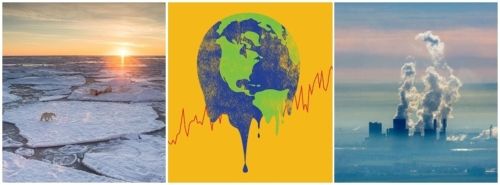
The Dangers of Climate Change Apathy

pjimage--1-

In a world where even parts of the infamously mild and miserable United Kingdom saw temperatures of 20C and devastating wildfires on a winter weekday in February, it is becoming impossible to deny the prevalence of climate change.

Despite the clear warnings that there is something deeply wrong with the weather, climate change scepticism is still rampant in parts of the world. Even in those that accept climate change there is a worrying tendency towards unhelpful behaviours.

There’s the ever-growing push for one solution in individual consumption, from veganism to ditching plastic straws, but equally as worrying is a strong sense of apathy coursing its way through the public consciousness on the footsteps of the growing acceptance of climate science.

Last week, during the unseasonably warm weather, an amusing, if anxiety-provoking, comic did the rounds on social media. The comic by the hilarious Sarah Scribbles, created in 2017 and relevant every year since, sums up the conflict of enjoying a “lovely” sunny winter day and the internal screams of watching the earth dying.

On these kinds of posts reactions often seem to edge towards almost the polar opposite of climate change denial, a complete acceptance of our path towards catastrophic global warming. Comments shrug off the impacts we are currently seeing as just the death throes of humanity rather than the finale of earth itself, which, once we are gone, will simply regenerate and start afresh, better and stronger without us.

These arguments are not only defeatist but also show the extreme arrogance of our species, the creature of the anthropocene, whose actions have so dramatically altered the world in just a few centuries.

While it may be true we are signing our own death warrants we are also including the majority (if not all) of the species of plant, animal and insect which share the world with us.

It is now widely accepted that we are in the sixth mass extinction event on planet earth. We are watching dozens of species go extinct every day. Many disappear before we’ve even discovered them. The WWF puts losses since 1970 at roughly 60 percent.

These are shocking figures, and not a trend that the earth is going to recover from overnight. It is likely it will take at least 5 to 10 million years for biodiversity to recover but depending on our impact it could be more. The mass extinction event which took place 250 million years ago, at the end of the Permian period, was the largest seen on earth with at least 90 percent of species wiped out. It took at least 30 million years for ecosystems to fully recover.

The last event of this kind, possibly the most popular mass extinction, was that of the dinosaurs 66 million years ago. This catastrophic event saw the disappearance of roughly 75 percent of life on earth and a significant shift in the globally dominant species, from reptiles to mammals. Only a handful of hardy species cling on today.

Is this the fate we want to resign the creatures we share our planet with to? Creatures which have taken millions of years to perfectly evolve to their environment which we are now ripping up.

The red panda, for instance, was linked to it’s distant cousin the giant panda by a common ancestor 40 million years ago. In the intervening time these two have evolved into two distinct species, one related to bears, the other closer to ferrets and weasels. Despite their now distant connection both species evolved a similar false thumb to help them eat their chosen diet, bamboo.

This fantastic convergent evolutionary phenomenon will not be repeated in the same way once we are gone. The red pandas, the giant pandas and even their beloved bamboo will be wiped out, possibly while we are still clinging onto our burning planet.

Those that are happily awaiting humanity’s destruction to let in a new flourishing era on earth are callously overlooking the accompanying losses. This kind of extreme apathy is just as destructive as those who deny climate change altogether. It produces the same inaction and acceleration of climatic catastrophe.

Instead we need positive action. A willingness to take a stand and try to change paths towards a more hopeful future. Dismantling the current destructive model of business as usual and creating a greener world for everyone.

Extinction Rebellion (XR) is such a group striving for this through non-violent direct action. The movement, which began in the UK but is already rapidly growing across the world, aims to create mass disruption to shake governments into action on climate change and is a direct response to the ongoing anthropocene mass extinction.

An approach that that combines a cohesive grand narrative and a focus on building local communities has already had significant attention and success. Bursting into life last November it saw thousands take to the streets in London and other cities across the UK.

Actions have included symbolic funeral processions throughout the country. A coffin for dead and dying species, as well as for our planet as a whole, is slowly marched through the streets. I will be joining one such protest this Saturday with my local group in Colchester. This alternative to the usually jubilant protest marches give the space for attendees to grieve for our current situation while also uniting to find solutions.

With the next mass event planned for a full week, commencing the 15th April, XR focuses not only on action but also creating a regenerative culture, bonding those who are terrified by climate change and breaking down the walls of alienation which create paralysing apathy.

Groups across the country are planning walks over the days leading up to the 15th to converge in London, an action symbolic of the resistance to modern day environmentally destructive living and the coming together of those who oppose it.

Our self-destruction through climate change isn’t going to see humanity wiped out and then every other species breath a sigh of relief that we’re gone. We’re dragging them down with us and in fact throwing them in the fires first. The planet may recover but it is likely to be a very different place.

There may be studies that say we’re already too late but I don’t think that is a reason to give in. We can try to lessen our impact, give life as it currently stands more time and if all else fails at least create a more green and healthy system for us all to live in.

However, I live in hope that we still have time to stop our own extinction and that of many of the creatures we share our planet with. But time is running out. Rather than resign ourselves to denial and apathy we can reach out to others and fight.

3 Comments

Filed under Articles, Environment, Uncategorized

Nuclear Memories

Following from the jarring experience of watching Jeremy Corbyn hounded on BBC Question Time for refusing to say he would be prepare to launch a nuclear attack I feel impelled to share something I wrote awhile ago. Begrudgingly cut from my piece on Orford Ness it is a depiction of the real experiences of two survivors of the nuclear attack on Hiroshima on August 8th 1945 which I read in a pamphlet called ‘Give me water; testimonies of Hiroshima and Nagasaki’. These are just two of the moving stories, with little to no embellishment, within this text which lay bare the haunting reality of the consequences of nuclear weapons which numerous members of the QT audience seemed somehow immune to conceptualising. 

These were the scenes which followed the dropping of a bomb which the Trident missiles are estimated to be at least eight times more powerful than. 

World War II. Hiroshima, 0,8 km from the explosion centre. 24 hours after the explosion of the atom bomb. Photo by Satsuo Nakata © ICRC Archives

(Hiroshima, 0.8km from the explosion centre, image from http://blogs.icrc.org/law-and-policy/2016/08/09/hiroshima-nagasaki-atomic-bomb-survivors/)

In a small, unimposing hut there it lies. Pure white walls surround the once active missile, if it was held up lengthwise it would probably be slightly shorter than me. Inside the room is dead silence, outside the strong wind occasionally batters at the flimsy windows. Despite the bomb being disarmed I still feel wary of it. At first I can’t bring myself to approach it. I stand on the other side of the room sizing it up, failing to visualise the immense power it once held. The silence is broken as the warden who let me in gently hurries me. I am spurned on to approach it, but nothing could bring me to touch the shining metal.

On the white casing is inscribed a series of letters and numbers that mean nothing to me, serial and reference numbers; the warden later tells me one of the sequences was to denote the colour. Above that are some direct instructions to the user: WARNING LOWER ROLLERS BEFORE CLAMPING SADDLE / TIGHTEN NUTS TO 15 LB. FT. USING TORQUE WRENCH. I can make little more of these instructions than I could the serial number. All I can relate to is the finale of Dr. Strangelove, as our cowboy turned soldier straddles the bomb like a rodeo bull on its unstoppable path, thrusting and cheering in total exuberance before he is consumed by the blinding light of detonation.

One of the first men to see this light, an American General, was dazzled by its beauty, naming it at once magnificent and terrifying, perfectly sublime. In those moments he was overcome by the magnitude of this weapon, convinced no poets could ever adequately explain it. It was a light of gold, purple, violet, grey and blue, these colours illuminating every peak and crevasse of the nearby mountains. Just under a month later civilians would also experience this light, one that could not, the General insisted, be imagined; its beauty can only be visualised if it is seen first-hand though you would be lucky to remember it.

In Japan, they call the light pika. For those at the hypocentre when the bombs were dropped on Hiroshima and Nagasaki, this was all they saw. On the 6th of August 1945, at 8:15AM, the first atomic weapon to be aggressively deployed, named Little Boy, annihilated a 1 mile radius in central Hiroshima, with further damage across the city. This city was actively chosen because it was a site of war manufacturing where there were many families as well as the military and workers.

That morning most people were relatively untroubled. Firebombings had been deployed across the country the few preceding nights but Hiroshima had received a signal that all was clear an hour previously. Housewife Futaba Kitayama was not afraid when she saw a plane flying above her. She watched it in fascination as it crossed the perfectly clear sky as she began her work. Near her someone cried “Oh, that’s a parachute! A parachute is coming down!” Kitayama turned in interest towards where they pointed. With barely enough time to see the parachute she did not see the bomb, or the obscene and wrathful letters that covered it. No one would read the American soldiers words, they were incinerated in the blast of their ultimate message.

Kitayama was as lost for words as the American General that first saw the light of the bomb. It was like someone had set fire to her eyes, as something like an ominous purple consumed her sight. The explosion threw her to the ground and roared throughout her body. As the world collapsed around her the light vanished to pitch black and she assumed this was her final moment.

Another woman, Toshie Fuijino, was 1.3km from the hypocentre when the bomb hit. The night before she and her youngest son had sat on their roof watching the stars. He showed her Orion, gazing over them. They had watched the sky above as nearby Kure City burned across the horizon. They had felt the certainty of their mortality. The boy had asked her why wars are even fought; she had no answers but to tell him not to bring up such questions at school for fear of the Military Police.

Fuijino had experienced the blast as a FLASH, transforming the whole world to a pale yellow. The shock waves vibrated through her right arm. The boom came some seconds later, enough time for her to stand up and wonder what was to be done. When it reached her she thought the whole of heaven and earth was crashing down upon her.

On the other side of town Kitayama realised she was still alive. With thoughts of her children spurning her on, she pulled herself out of the rubble. She would not allow them to be orphaned. The sky, which moments before had been a clear blue, was now dark like dusk, everything was grey and hazy. The landscape around her had been flattened. Gone were the buildings and any other landmark; it was all monotonous rubble, like an endless desert of rocks. She finally located the Tsurumi Bridge in the distance and became certain that if she was to cross it she would find herself once again in the world she had known. There she would be reunited with her children.

But across the bridge were the same scenes of utter devastation. In the water hundreds of people, turned into the same distorted grey figures, were squirming and screaming. Kitayama became conscious of her own body and realised the skin had been burnt from her arms. Yellow ooze was appearing from her hands, she did not dare think what the state of her face was. It was only when she looked back that she realised it was not an ordinary bomb that had hit and that all she had known had been decimated.

Suddenly hundreds or thousands of school children ran past her. Their clothes were tatters and their skin hung from their arms like long sleeves. Some jumped in the river, some gave up and simply fainted on the ground. Some more kept running, one shouting “Long live the Emperor” as he tumbled down with another close behind reciting the Military Order. Many more laughed hysterically or cried for their Mothers. Kitayama could barely process the scene in front of her; all she could think was “Why? Why these children?” The scene swam in front of her eyes for days to come making it hard to swallow any food. Even after Hiroshima was rebuilt she could not forget these children. They were built into the memory of what her city had become.

Fuijino was lost in grief for her son on the night following the attack. She had been reunited with the rest of her family but her youngest son had never returned. She lay in the basic shelter they had made in the place where their home had stood and wept while listening to the tears of her husband as he knelt in the remains of their children’s bedroom. She realised than that these same sobs were resonating across all Hiroshima as hundreds of families grieved for those they had lost. Though the same stars turned above her as those that she and her son had watched the night before the earth below had been transformed into a burned wasteland.

No heavenly guardians could protect them. There were no heroes that day. Who could sing songs for the man who in one flight killed at least 90,000 people and irreparably damaged so many other lives? Perhaps this is why we can’t have war heroes any more, the suffering is too immense to justify. As I look at the bomb in that white walled room I don’t spare a thought for the man who dropped the bomb, my mind is consumed by the thousands whose existence was extinguished in an instant. 5773 miles away and 70 years distant, the personal memories of those people affected by the atomic bombings lingers.

20150316_093727

Introductory page to ‘Give Me Water; Testimonies of Hiroshima and Nagasaki’, Citizens’ Group to Convey Testimonies of Hiroshima and Nagasaki, 1972

Save

Save

Leave a comment

Filed under Uncategorized

Trump, Ecocide and the American Dream

trump-1822121_960_720

As the first days of Trump’s presidency shoves its way into reality, and drags away any pretence that this was somehow, actually, never going to happen, millions of people across the globe are trying to work out what is going to happen, while praying to anyone that might be listening that it ends up being over a considerably shorter period than four whole years.

There’s lots of different people which are likely to suffer over the next few years including women, people of colour, LGBT groups, pretty much anyone who doesn’t fall into the happy category of the white-straight-rich man, but another thing that will suffer and effect everyone as it does is the environment. It is already clear that Trump’s reign will be one of rampant ecocide, where regulation to tackle climate change will be cut and men who deny climate change and are deeply invested in the fossil fuel industry are put in positions of power, including Energy and the Environmental protection agency. His decisions are so clearly fuelled by self-interest and scratching influential backs it’s hair-tearing levels of frustration.

There is a very simple reason as to why Trump appealed so widely and why The Simpsons seemed to predict his rise (though frankly his duping of over 60 million people is still baffling). Trump’s win is the culmination of the American Dream, a dream that is devoted to self-interest, endless expansive growth and accumulation and little else. People may try to tack words like progress and possibility to it but the end result is often devoid of these. The basic American Dream is that any man (a woman is often an after-thought) can make his way, own his business and buy a beautiful house in suburbia with a picket fence and apple pie. In reality it becomes something more akin to white men scrabbling to line their pockets the most, and be damned with the almost inevitable casualties. It is about amassing more and more property and wealth for no other end than just to have, and Trump has very happily won the game, proving yes you can do absolutely anything in America, provided you’re white and rich.

As I’ve discussed before, a lifestyle dedicated to growth is one that is unavoidable environmentally destructive but I think there is another seed planted in the American Dream which ploughs it towards a future that exists at the expense of the natural, an infatuation with conquest. This came from the most early settlers but became cemented 200 years later when the Frontier Myth took hold. The journey westward was centred on placing ownership on land and exploit it for the pilgrim’s own good (not matter who or what may already be making good use of it). It meant that a beautiful and majestic landscape became realised as something put there only for these new American people’s utility.

And so a history of careless destruction of the environment followed, with it’s legacy and neglectful mindset firmly established, a history that culminated in Donald Trump as the 45th president of the United States. I don’t think we need any clearer evidence that America needs to find itself a new dream to follow.

Save

Save

Leave a comment

Filed under Articles, Politics

Lapwing – A Completed Story

About a year ago I had the good fortune to be published in this beautiful collection by the Dunlin Press. In my piece I talked about human land management from a few angles but with a particular focus on the plight of the lapwing. This stunning bird was once a regular across East Anglia but now is a rare sight after numbers have plummeted, a fact demonstrated by the fact that I failed to see one while putting together my extract.

IMG_8134

However, in the last week or so I have been much more fortunate and can now say I am a delighted, true acquaintance to these charming creatures.

I first spotted one just before the new year. We were on our way for a spontaneous day out at the zoo and as we swung round a roundabout in the dense morning fog a distinctive curl caught me eye. “It’s a lapwing!”, I exclaimed to Ryan, and enjoyed the rest of the ride in a mixture of surprise and pleasure. It had only been the briefest of glances but I was absolutely certain I had finally seen a bird that had eluded me before then.

When we drove back some hours later though some doubt started to sink in. As we came round the curve the other way I could see the same figure, sat in practically the same place by the road side. By the end of the day I had half convinced myself it had to be a very realistic statue or some other trick as I couldn’t understand why it would have barely moved the whole day.

Luckily about a week later a happened to have the chance to chase my doubts away. On another errand we happened to pass the same roundabout again, and having noticed a small car park at the side of it I asked Ryan to pull over so we could take a little wander and explore the area. Barely a few metres from the car park and a figure in the sky caught my eye. The wings were splayed out and dark as it made its way to the ground and once it had landed I could see that curl once again. It was another lapwing, and this time there couldn’t be a shred of doubt to it’s identity or realness.

As my view of the field widened from this individual I noticed there was a whole flock, maybe up of about 20 or 30 birds, scattered over the landscape, picking their way through the grass with high peewit calls occasionally singing over the noise of passing cars. We stood and watched them for a while before giving into the cold, which could not be kept out by simply the thin jumper I had on. As we drove away though I got a final close-up glance, as one bird stood by the side of the road, perhaps a metre away from me. As I passed it I could see every shade of iridescent colour and could see the bright gleam of its eyes.

Perhaps it won’t come as a surprise that I’m not much of a birdwatcher. I love to observe them but there’s only a few times I’ve specifically gone out to seek them. It’s something I want to do more but for the moment there is something pleasing and fulfilling in these kinds of chance encounters, where I let a marvellous bird bring a sense of completeness to my day as I take in their motions when we just so happen to cross paths.

Leave a comment

Filed under Ramblings, Scribblings

30 Days Wild: Wilderness on the Edges

I think growing up in cities has always made me have an appreciation for the wilderness that thrives on the edges of where humans have dominated. Whether that is by coming face to face with a fox who has just darted out of the hedges of your local park in the middle of the night or seeing a colony of rabbits nibble the grass on a large roundabout or corvids mobbing each other at roadsides. There is something really enchanting about nature which greets you where you least expect it.

IMG_7762

One place I always enjoy it is on the walkway between my house and Woodbridge. It is one of those paths that feels enclosed with trees and bushes growing on every side. Even though it is surrounded by houses during the short walk, which only takes a few minutes, you could very easily forget. Blackbirds, squirrels and other creatures will often cross your path. Beautiful wild flowers grow in the bits of soil that trees and hedges haven’t colonised. It is peaceful and quiet and the most reviving walk one can have after working for hours in a local supermarket.

TWT 30 Days Wild_countdown_11ed

But where I appreciate the wilderness on the edges the most is when I’m doing my drive time birdwatching. I struggle to find the time to go to nature reserves and other places you might spot birds of prey but I am, and have always been, absolutely fascinated by them. Raptors are amazing creatures. From their vision to their power to the beauty of their form. Their command of the sky is enrapturing, their force awe-inspiring. I wish I could study and see them more but for the moment I am happy enough catching silhouettes as I drive along the main roads between Suffolk and Essex. I’ll suddenly catch a glimpse and wings in the sky and even though I can’t quite say what it is I know it isn’t another pigeon or gull. Often they’ll be hovering over a field, concentrating every fibre on whatever it is below them, or sometimes they’ll just be gliding above the tarmac making me turn my head to catch a second look.

I hope soon I’ll have more time and confidence to bring these wonderful birds into my life, but for the moment the simple glimpse I catch are enough.

Leave a comment

Filed under 30 Days Wild '16, Uncategorized

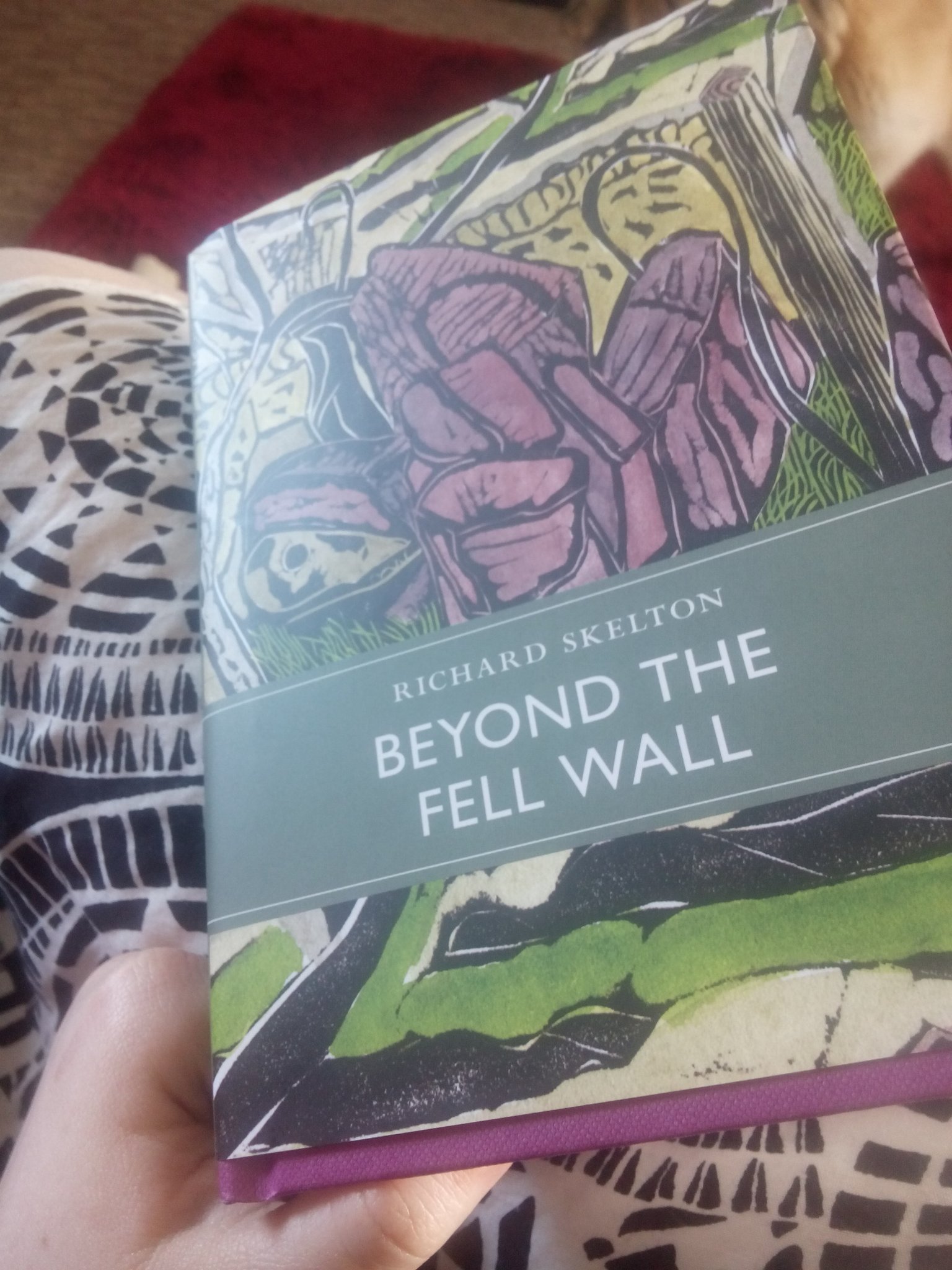
Review: Beyond the Fell Wall,Richard Skelton

A connection to nature and our surrounding landscape is increasingly considered to be vital to human health, happiness and general well-being. Re-establishing this connection is one of the main reasons publishing company, Little Toller Books, created their Monograph series. They bring together a range of artists and writers to create new writing dedicated to becoming attuned to the natural world. Each focuses on one place or object to create a grand picture of the British Isles.

For his recent contribution, Beyond the Fell Wall, Richard Skelton decided to focus on the unimposing stone wall in his homeland of Cumbria. Although it is a man-made object, the wall, which crosses through the fields and hills of the north of England, is deeply imbued with the characteristics of the natural world.

Through Skelton’s narrative, dancing between prose and poetry, the reader is shown an enduring structure which has been folded into the ever-changing life, and death, of its surrounding landscape.  This dark and haunting sense of the natural world is further enhanced by Michael Kirkman’s accompanying charcoal drawing; murky etchings, whose subjects are sometimes difficult to distinguish.

Although the centrepiece of his text is a structure made by human hands Skelton is immensely disparaging about humanity. There is the sense that he believes we have always been a destructive force in the world, with little hope of redemption. However, his book is just as much about human culture as it is about the natural landscape. The development of language plays an important undercurrent to the text, and human history cannot be avoided.

The wall is an object which brings together nature and human civilisation, revealing the similarities between them and how they infect each other. Both are built into the wall, and from it their stories can be extracted and lessons followed.

2 Comments

Filed under 30 Days Wild '16

30 Days Wild: The Wilds of the University of Essex

Had to take a break from wild blogging as my internet was down for a week. While it was refreshing it was also frustrating and meant my 30 Days Wild blogging got put on hold, so this is something I’ve been meaning to get out for a while.

I’ve been very lucky to spend the last 3 years studying and working at the University of Essex (while also living in rural Suffolk). While the Colchester Campus is a great place of learning it is also a wonderful place to experience nature. Those two factors meeting together worked brilliantly for my MA course, Wild Writing.

Right next to the new ultra-modern student centre is the two lakes. Although these were artificially created they have become homes for a diverse range of water birds. All year we have the ducks, coots and moorhens paddling through the water. With the first rays of spring we had a flock of Canadian geese join them and clutches of goslings were soon to follow. Further away in the marshier areas of campus there are swans and their cygnets. The water is also home to some quite sizeable fish. On sunny days you will see bodies, over a foot long, brush by the surface of the lakes.

This slideshow requires JavaScript.

Some photos of the Lakeside from February

If you wander further and over the hill just beyond the lakes you seem to really enter the wilds. The land becomes mossy and springy under foot. Look around and you wouldn’t think there could ever be university buildings just a few yards behind you. Rabbit holes are scattered across the ground, and the creatures themselves dart to and fro.

Then there’s the flock of jackdaws. Such enigmatic and enduring birds, they hop around all corners of the campus preying on the scraps left by students and flying into the sunset as evening begins to fall.

But, as I witnessed first hand the other week, the campus isn’t a idyllic heaven. The life and death games of nature are here too.

For my work as an assistant on one of the student helpdesks I sit right behind a large window looking out onto the lakes. We’ll often look out and spot rabbits or a coot that has taken to tapping on the windows and more recently clutches of ducklings. We were delighted the other week when a mother duck came along with hers. There was probably about seven of them and after wandering around and pecking at the ground they all huddled together to rest.

As they slept two mallards appeared from the lake. One immediately ran at the mother and chased her back and forth, eventually into the water. It was a few minutes before the ducklings realised what had happened. Eventually they got up and you could hear the fear and confusion as they called for their mother and waddled from shore to shore. Finally they braved the water alone and swam in circles trying to find her. I watched them until they disappeared and could only fear the worse. I’m afraid to say I haven’t seen them since.

Despite this I still can’t help but enjoy the wilds of the university campus. It is really one to explore all the corners of. One way to do it is the guided tree walk but going it alone is just as good!

2 Comments

Filed under 30 Days Wild '16, Uncategorized